“If you can’t love yourself, how the hell you gonna love somebody else?” - RuPaul - - - - - - - - - - - “if by a "Liberal" they mean someone who looks ahead and not behind, someone who welcomes new ideas without rigid reactions, someone who cares about the welfare of the people -- their health, their housing, their schools, their jobs, their civil rights, and their civil liberties -- someone who believes we can break through the stalemate and suspicions that grip us in our policies abroad, if that is what they mean by a "Liberal," then I'm proud to say I'm a "Liberal.” - John F. Kennedy - - - - - - - - - - - - “Imagine finding someone you love more than anything in the world, who you would risk your life for but couldn’t marry. And you couldn’t have that special day the way your friends do – you know, wear the ring on your finger and have it mean the same thing as everybody else. Just put yourself in that person’s shoes. It makes me feel sick to my stomach …. When I shared a picture of my tattoo on my Twitter page and said, ‘ALL LOVE is equal,’ a lot of people mocked me – they said, ‘What happened to you? You used to be a Christian girl!’ And I said, ‘Well, if you were a true Christian, you would have your facts straight. Christianity is about love.’ The debate resulted in a lot of threats and hate mail to people who agreed and disagreed with me. At one point I had to say, ‘Dude, everyone lay off.’ Can’t people have friendly debates about sensitive topics without it turning into unnecessary threats?” - Pop star Miley Cyrus on her marriage equality tattoo - - - - - - - - - - -
Loading
Showing posts with label Energy. Show all posts

Tuesday, June 18, 2013

Things We Can Do To Save The Environment - Issue No. 22 - Skip the Steak

I don't think giving up steak is on my list of helping the environment, but if it's something you've been thinking about doing, then by all means - quit it.  Seriously; all the cows in the world are warming up our planet faster than the millions of cars we drive in.  But it isn't just the cows - it's the sheep, buffalo and any other animal that takes a crap and releases nitrous oxide.

Giving credit to TIME,  I'd like to thank them for showing us the many ways we can help save the environment.  Just one person can make a difference, and it starts with YOU!
                                                   ~ Peter aka Blade7184  


22. Skip the Steak

Which is responsible for more global warming: your BMW or your Big Mac? Believe it or not, it's the burger. The international meat industry generates roughly 18% of the world's greenhouse-gas emissions—even more than transportation—according to a report last year from the U.N.'s Food and Agriculture Organization. Much of that comes from the nitrous oxide in manure and the methane that is, as the New York Times delicately put it, "the natural result of bovine digestion." Methane has a warming effect that is 23 times as great as that of carbon, while nitrous oxide is 296 times as great.

There are 1.5 billion cattle and buffalo on the planet, along with 1.7 billion sheep and goats. Their populations are rising fast, especially in the developing world. Global meat production is expected to double between 2001 and 2050. Given the amount of energy consumed raising, shipping and selling livestock, a 16-oz.T-bone is like a Hummer on a plate.

If you switch to vegetarianism, you can shrink your carbon footprint by up to 1.5 tons of carbon dioxide a year, according to research by the University of Chicago. Trading a standard car for a hybrid cuts only about one ton—and isn't as tasty.

Make sure to follow Blade 7184 every Tuesday for a new issue of Things We Can Do To Save The Environment.  Each issue is thought-provoking, informative and may hold the key to saving your children and grand-children's future.  Please feel free to click on my logo to read previous issues.

Tuesday, June 11, 2013

Things We Can Do To Save The Environment - Issue No. 21 - Cozy Up To Your Water Heater

Our water heater is in the garage, so I'm assuming it's warm to touch, because the garage is hot to begin with.  But I suppose it doesn't hurt to look into it...  Giving credit to TIME,  I'd like to thank them for showing us the many ways we can help save the environment.  Just one person can make a difference, and it starts with YOU!
                                                   ~ Peter aka Blade7184  


21. Cozy Up To Your Water Heater

Improving your home's efficiency doesn't have to mean hours in the attic tearing out the insulation. It might be as simple as giving your dear old water heater a warm hug. Wrapping your heater in an insulated blanket—one costs about $10 to $20 at home centers—could save your household about 250 lbs. in CO2 emissions annually. Most water heaters more than five years old are constantly losing heat and wasting energy because they lack internal insulation. If the surface feels warm to the touch, get your heater an extra blankie. You'll both feel better.


Make sure to follow Blade 7184 every Tuesday for a new issue of Things We Can Do To Save The Environment.  Each issue is thought-provoking, informative and may hold the key to saving your children and grand-children's future.  Please feel free to click on my logo to read previous issues.

Tuesday, June 4, 2013

Things We Can Do To Save The Environment - Issue No. 20 - Check the Label

Whenever Ryan and I buy an appliance or something new for our home that requires the use of electricity, we look at those yellow stickers that say "EnergyGuide".  I'm sure you've seen them.  And while the prices may often be a little steep, the end result is a lower bill.  And who doesn't want to save money and help the environment at the same time?
ENERGY STAR is a U.S. Environmental Protection Agency voluntary program that helps businesses and individuals save money and protect our climate through superior energy efficiency. Learn more about ENERGY STAR.  
Giving credit to TIME,  I'd like to thank them for showing us the many ways we can help save the environment.  Just one person can make a difference, and it starts with YOU!
                                                   ~ Peter aka Blade7184  


20. Check the Label

You wouldn't buy a car without knowing its gas mileage. Why not do the same when choosing energy-efficient ovens or even supermarkets and hotels? Energy Star, a rating system by the Environmental Protection Agency, will help you find them. Approved products can be pricier, but they cost less to power. Commercial buildings account for nearly 18% of U.S. greenhouse-gas emissions, but those with the Energy Star label consume 35% less energy than the average. By using Energy Star appliances at home, consumers can reduce their utility bill as much as 30%.

Make sure to follow Blade 7184 every Tuesday for a new issue of Things We Can Do To Save The Environment.  Each issue is thought-provoking, informative and may hold the key to saving your children and grand-children's future.  Please feel free to click on my logo to read previous issues.

Tuesday, May 7, 2013

Things We Can Do To Save The Environment - Issue No. 19 - Buy Green Power, At Home or Away

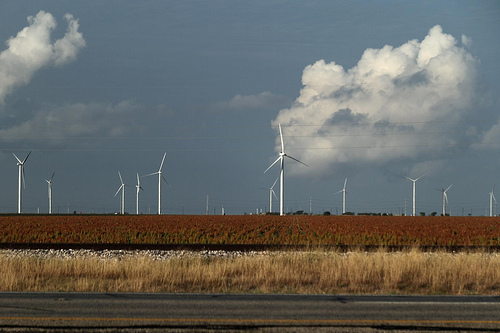
pic from a farm near my parent's home
I didn't know we could opt to buy green power; I guess I'll have to look at our bill to see where our energy is coming from.

Every time we go visit my parents down in Corpus Christi, TX, we see wind farms as far as the eye can see, and this is something I never would have pictured growing up.  What's ironic about the whole thing is... that the power generated by these farms are helping cities hundreds of miles away, and not necessarily the local community.

Giving credit to TIME,  I'd like to thank them for showing us the many ways we can help save the environment.  Just one person can make a difference, and it starts with YOU!
 
                                                   ~ Peter aka Blade7184  


19. Buy Green Power, At Home or Away

More than 600 utilities in 37 states offer green energy, but unless you read the fine print on your bill, you may not know if your power company is one of them. (To find out, visit eere.energy.gov/greenpower.) If you don't live in a green power zone, you can support the industry by buying renewable energy certificates, which allow you to purchase green energy in another part of the country. The extra dollars will dispense green power to the national power grid.

Make sure to follow Blade 7184 every Tuesday for a new issue of Things We Can Do To Save The Environment.  Each issue is thought-provoking, informative and may hold the key to saving your children and grand-children's future.  Please feel free to click on my logo to read previous issues.

Monday, April 22, 2013

Things We Can Do To Save The Environment - Issue No. 18 - Ask the Experts For An Energy Audit of Your Home

I know this issue is a day early, but it's Earth Day!  Happy Earth Day Everyone!  I bet you didn't know having an energy audit done on your home could save you up to $600 dollars a year.  And it wouldn't even cost you a dime.

Giving credit to TIME,  I'd like to thank them for showing us the many ways we can help save the environment.  Just one person can make a difference, and it starts with YOU!
 
                                                   ~ Peter aka Blade7184  


18. Ask the Experts For An Energy Audit of Your Home

How green is your abode? A home energy audit, which most utility providers will do free of charge, will tell you the amount of power your household consumes and what you can do to reduce it. The average family can find ways to shave 1,000 lbs. of CO2 emissions each year. Energy auditors use special equipment like blower doors and infrared cameras to help you pinpoint exactly how your house is losing energy. You can also perform a do-it-yourself audit (click here), but this is one time you might actually want to be audited by the experts.  

Make sure to follow Blade 7184 every Tuesday for a new issue of Things We Can Do To Save The Environment.  Each issue is thought-provoking, informative and may hold the key to saving your children and grand-children's future.  Please feel free to click on my logo to read previous issues.
Tuesday, March 5, 2013

Things We Can Do To Save The Environment - Issue No. 11 - Take Another Look at Vintage Clothes

So you may think I'm a crazy nut for saying this, but I like going to second-hand stores.  Yes, I'll admit it.  I like looking for anything vintage; Whether it be clothing, antiques or little knick-knacks here and there.  But little do you know that by me purchasing these items the second time around I am helping the environment.

Giving credit to TIME,  I'd like to thank them for showing us the many ways we can help save the environment.  Just one person can make a difference, and it starts with YOU!  

                                                   ~ Peter aka Blade7184  

11. Take Another Look at Vintage Clothes

High-end hand-me-downs (the smart set calls them vintage) are more ecologically sound than new clothes. Why? Buying a shirt the second time around means you avoid consuming all the energy used in producing and shipping a new one and, therefore, the carbon emissions associated with it. Every item of clothing you own has an impact on the environment. Some synthetic textiles are made with petroleum products. Cotton accounts for less than 3% of farmed land globally but consumes about a quarter of the pesticides. One quick way to change your duds: invite friends over for a closet swap, to which everyone brings a few items they want to trade. It's easy on the environment—and your pocketbook.

Make sure to follow Blade 7184 every Tuesday for a new issue of Things We Can Do To Save The Environment.  Each issue is thought-provoking, informative and may hold the key to saving your children and grandchildren's future.
Please feel free to click on my logo to read any of the back-issues.

Tuesday, February 19, 2013

Things We Can Do To Save The Environment - Issue No. 10 - Turn Up the Geothermal Heat

I want to add mirrors on my roof so that the sunlight can reflect inside.  Then again, we hardly ever have many lights on in the house.  And if I had a flat roof, I would plant grass, flowers and trees on it - it's all about being geothermal, right?

Giving credit to TIME,  I'd like to thank them for showing us the many ways we can help save the environment.  Just one person can make a difference, and it starts with YOU!  
                                                   ~ Peter aka Blade7184  


10. Turn Up the Geothermal Heat

With clever engineering and an elegantly simple design, Diane von Furstenberg reinvigorated women's fashion in the 1970s with the wrap dress. Can she do the same for a building? Her newest project is a 35,000-sq.-ft. office, showroom and retail store in Manhattan's trendy meatpacking district, all heated and cooled by water pumped from deep underground. This geothermal system taps into water that is a relatively stable 55 degrees farenheit and transfers that heat to warm the building in the winter and cool it in the summer. The building's roof is covered in easy-to-maintain plants and grasses, and has two heliostat mirrors, which track the sun and direct its rays into the building, reducing the use of artificial lights during the day. Who says being environmentally conscious can't be cool—and hot?  Check out all the awesome pics, and updated story on Diane von Furstenberg's showroom and retail store here. [Updated] 

Make sure to follow Blade 7184 every Tuesday for a new issue of Things We Can Do To Save The Environment.  Each issue is thought-provoking, informative and may hold the key to saving your children and grandchildren's future.
Please feel free to click on my logo to read any of the back-issues.

Tuesday, February 12, 2013

Things We Can Do To Save The Environment - Issue No. 09 - Build a Skyscraper

The Global Warming Survival Guide

Thinking of building a new home? Buying one?  Well, take into consideration how much you can help the environment by using materials that conserve energy.  Using recycled steel, insulating concrete, cool roofing shingles, recycled wood/plastic composite lumber, Low-E windows and many more materials can help keep you cool during the summer months and warm during the winter; all while helping the environment.

Giving credit to TIME,  I'd like to thank them for showing us the many ways we can meet these goals.  Just one person can make a difference, and it starts with YOU!  
                                                   ~ Peter aka Blade7184  

9. Build a Skyscraper

Almost everything about the Bank of America tower, a soaring skyscraper under construction near Times Square in New York City, has been designed to minimize the use of energy. Take the concrete. Making the stuff from scratch is very energy intensive, so the builders are using a mix of 55% concrete and 45% slag, a waste product from blast furnaces. Mixing slag with concrete saves energy and makes the concrete stronger. The tower will save so-called gray water from washrooms and use it to flush the toilets. The building will also generate much of its own electricity from natural gas, a less potent carbon emitter than coal. These features will account for $3.5 million of a total building cost of $1.2 billion, but the owners expect to recoup that in a few years with all the energy they'll save. When it's finished next year, the tower will be the second highest in the city, but it stands alone as the greenest building in New York. [Updated]

Make sure to follow Blade 7184 every Tuesday for a new issue of Things We Can Do To Save The Environment.  Each issue is thought-provoking, informative and may hold the key to saving your children and grandchildren's future.
Please feel free to click on my logo to read any of the back-issues.

Tuesday, February 28, 2012

Things We Can Do To Save The Environment - Issue No. 06 - Ditch The Mansion

The Global Warming Survival Guide

Purchasing a smaller home is one of the many ways to help save the environment, and at the moment, Ryan and I are living in it.  But our future goals have us buying a much larger one.  In this day and age there are many energy saving products we can buy, so hopefully by the time we build or buy our larger home we will still be doing our part.  

Giving credit to TIME,  I'd like to thank them for showing us the many ways we can meet these goals of saving our environment.  And yes, even one person can make a difference, and it starts with YOU! - Peter aka Blade7184

6. Ditch the Mansion

Oversize houses aren't just architecturally offensive; they also generally require more energy to heat and cool than smaller ones, even with efficient appliances. And in the U.S., big houses are becoming the norm, even though a relatively inefficient small house consumes less energy than a greener large house and uses fewer building materials, which expand the carbon footprint. A typical new single-family home in the U.S. is nearly 2,500 square feet today, up from about 1,000 square feet in 1950, even as the average household has shrunk from 3.4 to 2.6 people. 

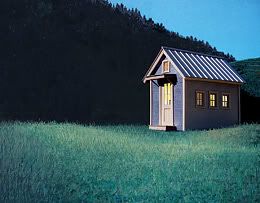
If you really want to live small, visit Jay Shafer. The former art professor dwells alone in a home fit for a hobbit, 100 sq. ft. in northern California that he designed and built himself in 1999. Shafer now runs Tumbleweed Tiny House and sells custom designs for miniature dwellings that range from 70 sq. ft. to 350 sq. ft. He made his move because he felt guilty about the size of his residential carbon footprint, and now prefers life tiny and tidy. "If I throw my jeans down on the floor, I can't get across the room." 

Make sure to follow Blade 7184 every Tuesday for a new issue of Things We Can Do To Save The Environment.  Each issue is thought-provoking, informative and may hold the key to saving your children and grandchildren's future

Tuesday, February 7, 2012

Things We Can Do To Save The Environment - Issue No. 03 - Change Your Lightbulbs

If you haven't already done it, you should.  Changing your lightbulbs is one of the many "Things We Can Do To Save The Environment".  Ryan and I changed our lightbulbs six years ago, and I can't remember the last time I had to replace one. Seriously, it's been that long. 

Giving credit to TIME,  I'd like to thank them for showing us the many ways we can meet these goals of saving our environment.  And yes, even one person can make a difference, and it starts with YOU!

The Global Warming Survival Guide


3. Change Your Lightbulbs

The hottest thing in household energy savings is the compact fluorescent lightbulb (CFL), a funny-looking swirl that fits into standard sockets. CFLs cost three to five times as much as conventional incandescent bulbs yet use one-quarter the electricity and last several years longer. They are available virtually everywhere lightbulbs are sold. Most labels don't say "CFL" (GE calls its bulbs Energy Savers), and in some cases the telltale twist is enclosed in frosted glass. The wattage gives them away: many 7-watt CFLs are comparable to a regular 40-watt bulb, 26 watts is the typical CFL equivalent of 100 watts and so on. Or just look for the Energy Star label.

CFLs have come a long way since they were first introduced in the mid-'90s (they don't flicker as much when you turn them on, for one thing), but because each bulb still contains 5 mg of mercury, you're not supposed to toss them out with the regular trash, where they could end up in a landfill. So the bulbs are one more thing for you to sort in the recycling bin.

Light-emitting diodes, or LEDs (see item 4), don't have this problem, but they can require a bit of DIY rewiring. LEDs work great as accents and task lights, and you can also buy LED desk and floor lamps. But if you're just looking to put a green bulb in your favorite table lamp, CFL is the way to go.

Make sure to follow Blade 7184 every Tuesday for a new issue of Things We Can Do To Save The Environment.  Each issue is thought-provoking, informative and may hold the key to saving your children and grandchildren's future

Wednesday, January 18, 2012

If The World Were A Village of 100 People: Issue No. 20 - Energy

Wow, I have completed the series!   This is the 20th and final poster of my series "If The World Were A Village of 100 People".

For the past 20 weeks I have been blogging about these posters designed by Toby Ng, where he took statistics based on the spread of the population in the world today and translated those statistics into a town of 100 people.  So you'd ask yourself, "What if the world were a village of 100 people?" And these posters would answer that question in a much more simpler way.

In my humble opinion I think these posters were a great educational tool.  And they would be great to share with your kids or a classroom.

If you missed any of the previous issues, click here or on each individual poster below.


Issues No. 01 - 19

Stay tuned for a whole new series next week... 

"Things We Can Do To Save The Environment"

I have organized my blogs with 3 days worth of postings, so if you wish to continue reading the days before that, and so forth and so forth, you can click the "Older Posts" button /\ /\ /\ right /\ up there.

There are 3 other ways you can find interesting topics to read as well.

*Clicking on any of the links under my "Favorite Categories" section on the left hand side of your screen

*Using the Google Search bar under the scrolling text.

*By choosing a date from the drop down list on the right hand side of your screen.


Hope you enjoy my daily posts, and hope to hear from you soon.

- Blade 7184 aka Peter