“If you can’t love yourself, how the hell you gonna love somebody else?” - RuPaul - - - - - - - - - - - “if by a "Liberal" they mean someone who looks ahead and not behind, someone who welcomes new ideas without rigid reactions, someone who cares about the welfare of the people -- their health, their housing, their schools, their jobs, their civil rights, and their civil liberties -- someone who believes we can break through the stalemate and suspicions that grip us in our policies abroad, if that is what they mean by a "Liberal," then I'm proud to say I'm a "Liberal.” - John F. Kennedy - - - - - - - - - - - - “Imagine finding someone you love more than anything in the world, who you would risk your life for but couldn’t marry. And you couldn’t have that special day the way your friends do – you know, wear the ring on your finger and have it mean the same thing as everybody else. Just put yourself in that person’s shoes. It makes me feel sick to my stomach …. When I shared a picture of my tattoo on my Twitter page and said, ‘ALL LOVE is equal,’ a lot of people mocked me – they said, ‘What happened to you? You used to be a Christian girl!’ And I said, ‘Well, if you were a true Christian, you would have your facts straight. Christianity is about love.’ The debate resulted in a lot of threats and hate mail to people who agreed and disagreed with me. At one point I had to say, ‘Dude, everyone lay off.’ Can’t people have friendly debates about sensitive topics without it turning into unnecessary threats?” - Pop star Miley Cyrus on her marriage equality tattoo - - - - - - - - - - -
Loading
Showing posts with label Things We Can Do To Save The Environment. Show all posts

Tuesday, October 15, 2013

Things We Can Do To Save The Environment - Issue No. 23 - Copy California

It's amazing how much can happen when a Democrat takes over.  California has quickly emerged out of a deficit thanks to Governor Jerry Brown.  It's no BS.  By the time Governor Schwarzenegger left office the state had a $25.4 billion deficit and within two years, the state now has a surplus of $851 million.  But politics aside, the Terminator did sign the world's largest anti-global warming law before he left office...

Giving credit to TIME,  I'd like to thank them for showing us the many ways we can help save the environment.  Just one person can make a difference, and it starts with YOU!
                                                   ~ Peter aka Blade7184  


23. Copy California

Arnold Schwarzenegger may have signed the world's toughest anti-global-warming law, but it is Democrat Terry Tamminen, his environmental adviser, who is emerging as the state's real Terminator, winning industry support and the endorsement of a Republican Governor for a mandate to reduce the state's emissions 80% by 2050. 

But thwarting climate change isn't a solo effort. Tamminen left his official post to build a national response to global warming one state at a time. "I am trying to Johnny Appleseed what California has done," Tamminen says. His goal is to create a de facto national climate plan out of individual efforts in the 50 states. "He is crisscrossing the country and spreading the word," says Karl Hausker, deputy director of the Center for Climate Strategies. "Terry gets state leaders interested in doing this." Hausker's nonpartisan, nonprofit group handles the technical details after Tamminen plants his seeds. Nineteen states have developed or are developing aggressive climate plans based on the work of Hausker's group and Tamminen. So much progress is being made at the state and regional level, Tamminen says, that "by the time that there is a new Administration in the White House, a majority of Americans will live in states with a meaningful plan that deals with the climate-change issue."

Make sure to follow Blade 7184 every Tuesday for a new issue of Things We Can Do To Save The Environment.  Each issue is thought-provoking, informative and may hold the key to saving your children and grand-children's future.  Please feel free to click on my logo to read previous issues.

Tuesday, June 18, 2013

Things We Can Do To Save The Environment - Issue No. 22 - Skip the Steak

I don't think giving up steak is on my list of helping the environment, but if it's something you've been thinking about doing, then by all means - quit it.  Seriously; all the cows in the world are warming up our planet faster than the millions of cars we drive in.  But it isn't just the cows - it's the sheep, buffalo and any other animal that takes a crap and releases nitrous oxide.

Giving credit to TIME,  I'd like to thank them for showing us the many ways we can help save the environment.  Just one person can make a difference, and it starts with YOU!
                                                   ~ Peter aka Blade7184  


22. Skip the Steak

Which is responsible for more global warming: your BMW or your Big Mac? Believe it or not, it's the burger. The international meat industry generates roughly 18% of the world's greenhouse-gas emissions—even more than transportation—according to a report last year from the U.N.'s Food and Agriculture Organization. Much of that comes from the nitrous oxide in manure and the methane that is, as the New York Times delicately put it, "the natural result of bovine digestion." Methane has a warming effect that is 23 times as great as that of carbon, while nitrous oxide is 296 times as great.

There are 1.5 billion cattle and buffalo on the planet, along with 1.7 billion sheep and goats. Their populations are rising fast, especially in the developing world. Global meat production is expected to double between 2001 and 2050. Given the amount of energy consumed raising, shipping and selling livestock, a 16-oz.T-bone is like a Hummer on a plate.

If you switch to vegetarianism, you can shrink your carbon footprint by up to 1.5 tons of carbon dioxide a year, according to research by the University of Chicago. Trading a standard car for a hybrid cuts only about one ton—and isn't as tasty.

Make sure to follow Blade 7184 every Tuesday for a new issue of Things We Can Do To Save The Environment.  Each issue is thought-provoking, informative and may hold the key to saving your children and grand-children's future.  Please feel free to click on my logo to read previous issues.

Tuesday, June 11, 2013

Things We Can Do To Save The Environment - Issue No. 21 - Cozy Up To Your Water Heater

Our water heater is in the garage, so I'm assuming it's warm to touch, because the garage is hot to begin with.  But I suppose it doesn't hurt to look into it...  Giving credit to TIME,  I'd like to thank them for showing us the many ways we can help save the environment.  Just one person can make a difference, and it starts with YOU!
                                                   ~ Peter aka Blade7184  


21. Cozy Up To Your Water Heater

Improving your home's efficiency doesn't have to mean hours in the attic tearing out the insulation. It might be as simple as giving your dear old water heater a warm hug. Wrapping your heater in an insulated blanket—one costs about $10 to $20 at home centers—could save your household about 250 lbs. in CO2 emissions annually. Most water heaters more than five years old are constantly losing heat and wasting energy because they lack internal insulation. If the surface feels warm to the touch, get your heater an extra blankie. You'll both feel better.


Make sure to follow Blade 7184 every Tuesday for a new issue of Things We Can Do To Save The Environment.  Each issue is thought-provoking, informative and may hold the key to saving your children and grand-children's future.  Please feel free to click on my logo to read previous issues.

Tuesday, June 4, 2013

Things We Can Do To Save The Environment - Issue No. 20 - Check the Label

Whenever Ryan and I buy an appliance or something new for our home that requires the use of electricity, we look at those yellow stickers that say "EnergyGuide".  I'm sure you've seen them.  And while the prices may often be a little steep, the end result is a lower bill.  And who doesn't want to save money and help the environment at the same time?
ENERGY STAR is a U.S. Environmental Protection Agency voluntary program that helps businesses and individuals save money and protect our climate through superior energy efficiency. Learn more about ENERGY STAR.  
Giving credit to TIME,  I'd like to thank them for showing us the many ways we can help save the environment.  Just one person can make a difference, and it starts with YOU!
                                                   ~ Peter aka Blade7184  


20. Check the Label

You wouldn't buy a car without knowing its gas mileage. Why not do the same when choosing energy-efficient ovens or even supermarkets and hotels? Energy Star, a rating system by the Environmental Protection Agency, will help you find them. Approved products can be pricier, but they cost less to power. Commercial buildings account for nearly 18% of U.S. greenhouse-gas emissions, but those with the Energy Star label consume 35% less energy than the average. By using Energy Star appliances at home, consumers can reduce their utility bill as much as 30%.

Make sure to follow Blade 7184 every Tuesday for a new issue of Things We Can Do To Save The Environment.  Each issue is thought-provoking, informative and may hold the key to saving your children and grand-children's future.  Please feel free to click on my logo to read previous issues.

Tuesday, May 7, 2013

Things We Can Do To Save The Environment - Issue No. 19 - Buy Green Power, At Home or Away

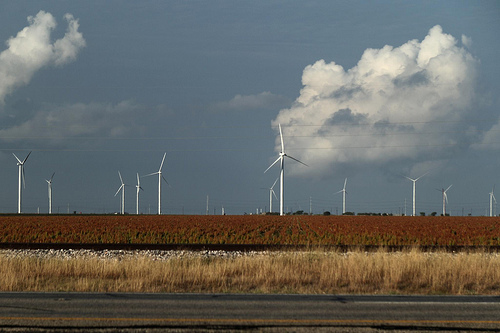
pic from a farm near my parent's home
I didn't know we could opt to buy green power; I guess I'll have to look at our bill to see where our energy is coming from.

Every time we go visit my parents down in Corpus Christi, TX, we see wind farms as far as the eye can see, and this is something I never would have pictured growing up.  What's ironic about the whole thing is... that the power generated by these farms are helping cities hundreds of miles away, and not necessarily the local community.

Giving credit to TIME,  I'd like to thank them for showing us the many ways we can help save the environment.  Just one person can make a difference, and it starts with YOU!
 
                                                   ~ Peter aka Blade7184  


19. Buy Green Power, At Home or Away

More than 600 utilities in 37 states offer green energy, but unless you read the fine print on your bill, you may not know if your power company is one of them. (To find out, visit eere.energy.gov/greenpower.) If you don't live in a green power zone, you can support the industry by buying renewable energy certificates, which allow you to purchase green energy in another part of the country. The extra dollars will dispense green power to the national power grid.

Make sure to follow Blade 7184 every Tuesday for a new issue of Things We Can Do To Save The Environment.  Each issue is thought-provoking, informative and may hold the key to saving your children and grand-children's future.  Please feel free to click on my logo to read previous issues.
Monday, April 22, 2013

Things We Can Do To Save The Environment - Issue No. 18 - Ask the Experts For An Energy Audit of Your Home

I know this issue is a day early, but it's Earth Day!  Happy Earth Day Everyone!  I bet you didn't know having an energy audit done on your home could save you up to $600 dollars a year.  And it wouldn't even cost you a dime.

Giving credit to TIME,  I'd like to thank them for showing us the many ways we can help save the environment.  Just one person can make a difference, and it starts with YOU!
 
                                                   ~ Peter aka Blade7184  


18. Ask the Experts For An Energy Audit of Your Home

How green is your abode? A home energy audit, which most utility providers will do free of charge, will tell you the amount of power your household consumes and what you can do to reduce it. The average family can find ways to shave 1,000 lbs. of CO2 emissions each year. Energy auditors use special equipment like blower doors and infrared cameras to help you pinpoint exactly how your house is losing energy. You can also perform a do-it-yourself audit (click here), but this is one time you might actually want to be audited by the experts.  

Make sure to follow Blade 7184 every Tuesday for a new issue of Things We Can Do To Save The Environment.  Each issue is thought-provoking, informative and may hold the key to saving your children and grand-children's future.  Please feel free to click on my logo to read previous issues.

Tuesday, April 16, 2013

Things We Can Do To Save The Environment - Issue No. 17 - Open a Window

Who would have thought opening a window could help the environment?  Geez, I haven't slept with an open window since I was a child.  And with today's recent events, it's practically unheard of.  But who says you can't do it during the day?  By following a few suggestions from today's article, you can lose up to 4000 pounds of carbon dioxide a year.

Giving credit to TIME,  I'd like to thank them for showing us the many ways we can help save the environment.  Just one person can make a difference, and it starts with YOU!
 
                                                   ~ Peter aka Blade7184  


17. Open a Window

Most of the 25 tons of CO2 emissions each American is responsible for each year come from the home. Here are some easy ways to get that number down in a hurry without rebuilding. Open a window instead of running the AC. Adjust the thermostat a couple of degrees higher in the summer and lower in the winter. Caulk and weatherstrip all your doors and windows. Insulate your walls and ceilings. Use the dishwasher only when it's full. Install low-flow showerheads. Wash your clothes in warm or cold water. Turn down the thermostat on the water heater. At the end of the year, don't be surprised if your house feels lighter. It just lost 4,000 lbs. of carbon dioxide.
 

Make sure to follow Blade 7184 every Tuesday for a new issue of Things We Can Do To Save The Environment.  Each issue is thought-provoking, informative and may hold the key to saving your children and grandchildren's future.  Please feel free to click on my logo to read previous issues.

Tuesday, April 9, 2013

Things We Can Do To Save The Environment - Issue No. 16 - Pay Your Bills Online

I bet you didn't know that by paying your bills online you're helping the environment.  Think about it.  Every time you get a bill in the mail, your statement is printed on 1 to 6 sheets of paper.  Imagine all the trees you could save by accepting your bill electronically.

Ryan and I pay our bills online, but it wasn't until 2 or 3 months ago that we stopped all the paper nonsense.  Another thing to mark off our "Saving our Environment" list!!

Giving credit to TIME,  I'd like to thank them for showing us the many ways we can help save the environment.  Just one person can make a difference, and it starts with YOU!

 
                                                   ~ Peter aka Blade7184  


16. Pay Your Bills Online

Eliminating your paper trail by banking and paying bills online does more than save trees. It also helps reduce fuel consumption by the trucks and planes that transport paper checks. If every U.S. home viewed and paid its bills online, the switch would cut solid waste by 1.6 billion tons a year and curb greenhouse-gas emissions by 2.1 million tons a year, according to Javelin Strategy & Research. Worried about security? Don't be. Just ignore e-mails "phishing" for personal data, and monitor all (electronic) statements for any unauthorized debits. Report problems immediately, and your credit won't take the hit. To avoid unnecessary carbon dioxide-emitting car trips to the bank on payday, ask your employer to directly deposit your paycheck. You'll get your money faster that way too.
 
Make sure to follow Blade 7184 every Tuesday for a new issue of Things We Can Do To Save The Environment.  Each issue is thought-provoking, informative and may hold the key to saving your children and grandchildren's future.  Please feel free to click on my logo to read previous issues.

Tuesday, April 2, 2013

Things We Can Do To Save The Environment - Issue No. 15 - Move to a High-Rise

If you currently live in a high-rise, or about to move into one, then by all intent and purposes - you are helping our environment.  How?  Well, considering that you're likely living in a smaller place, means less gas and electricity.  As the article states below, people living in cities such as New York, are living in really tight places. The smaller the area, the smaller the carbon footprint.

Ryan and I enjoy living in the suburbs.  We like our quiet, peaceful life; If we want a little noise we can always take the 15-20 minute trip south into Houston.  Hey, we have a Prius C - we're helping the environment dammit!

Giving credit to TIME,  I'd like to thank them for showing us the many ways we can help save the environment.  Just one person can make a difference, and it starts with YOU!

 
                                                   ~ Peter aka Blade7184  


15. Move to a High-Rise

If you're a true environmentalist, a dyed-in-the-wool greenie, then why not pack up your leafy rural home and move to New York City—preferably to a tall building right in the middle of Manhattan? 

The Big Apple is home to the greenest citizens in the U.S. Relatively few New Yorkers own cars—one of the biggest contributors to an individual's carbon emissions. Most walk, bike or ride public transit to work—all more efficient transport than the best hybrids.

And New York has developed up, rather than out, which limits wasteful sprawl. Eight million New Yorkers are squeezed into 301 sq. mi.—less than a fortieth of an acre per person. Even a fairly dense suburb devotes about a third of an acre to each person. Density means that commutes, shopping trips and supply chains are shorter. Plus, New Yorkers tend to live in small spaces, although they're a little cranky about it. The denser the area you call home, the smaller your personal carbon footprint—not to mention your gas and electricity bill.
 
Make sure to follow Blade 7184 every Tuesday for a new issue of Things We Can Do To Save The Environment.  Each issue is thought-provoking, informative and may hold the key to saving your children and grandchildren's future.  Please feel free to click on my logo to read any of the back-issues.

Tuesday, March 26, 2013

Things We Can Do To Save The Environment - Issue No. 14 - Ride the Bus

I can't even recall the last time I rode a bus to work.  But the one time I did, I was living in Corpus Christi, TX.  I remember having to rely on the bus for at least two weeks when the transmission in my Chevrolet Lumina (don't ask), fell out.

There were two good things that came out of that experience, I met some wonderful people on the bus and saved a bunch of money on gas!!!!  But just as I was able to keep some extra money in my pocket, I contributed to our environment in some form or another.

Giving credit to TIME,  I'd like to thank them for showing us the many ways we can help save the environment.  Just one person can make a difference, and it starts with YOU!
 
                                                   ~ Peter aka Blade7184


14. Ride the Bus

With transport accounting for more than 30% of U.S. carbon dioxide emissions, one of the best ways to reduce them is by riding something many of us haven't tried since the ninth grade: a bus. Public transit saves an estimated 1.4 billion gal. of gas annually, which translates into about 14 million tons of CO2, according to the American Public Transportation Association.
 
Unfortunately, 88% of all trips in the U.S. are by car. Partly, that's because public transportation is more readily available in big urban areas. One promising alternative is bus rapid transit (BRT), which features extra-long carriers running in dedicated lanes. Buses emit more carbon than trains, but that can be minimized by using hybrid or compressed-natural-gas engines. A study last year by the Breakthrough Technologies Institute found that a BRT system in a medium-size U.S. city could cut emissions by as much as 654,000 tons over 20 years. 

Thanks to high gas prices, miles driven per motorist dropped in 2005 for the first time since 1980, according to the Pew Research Center. The U.S. is ready to change. We're just waiting for the bus.
 
The original version of this article misstated the total amount of CO2 emissions saved annually by public transit. It is 14 million, not 1.5 million, tons.

Make sure to follow Blade 7184 every Tuesday for a new issue of Things We Can Do To Save The Environment.  Each issue is thought-provoking, informative and may hold the key to saving your children and grandchildren's future.


Please feel free to click on my logo to read any of the back-issues.

Tuesday, March 19, 2013

Things We Can Do To Save The Environment - Issue No. 13 - Let Employees Work Close to Home

Ahhhh, this would be a dream come true.  Considering I work in THE LARGEST MEDICAL CENTER IN THE WORLD!  No, I didn't scream that out loud.  Just sayn'.

I do have to say that commuting to work in the morning only takes me 25 minutes, and I drive a Prius C.  So at 54 miles per gallon, I think I'm helping the environment and my pocket.

But suffice it to say, not everyone owns a hybrid vehicle or a Volt so yes, letting employees work close to home would be peachy.

Giving credit to TIME,  I'd like to thank them for showing us the many ways we can help save the environment.  Just one person can make a difference, and it starts with YOU!

 
                                                   ~ Peter aka Blade7184  


13. Let Employees Work Close to Home

Sitting in gridlock wastes your time and the planet's fuel. The only solution, it seems, is to move your home next to the office. But what if you could move the office a little closer to home? 

That, in essence, is the concept called proximate commuting. It works best for companies with multiple locations in one metro area. Gene Mullins, a software developer in Seattle, created a program that helps firms slash the time employees spend driving by matching them with work closer to home. 

Mullins did studies for Starbucks, Key Bank, Boeing and, most recently, Seattle's fire department. He found that only 4% of the firefighters worked at the station closest to their home; some commuted 145 miles each way. At Boeing, daily commutes of its 80,000 Puget Sound employees total 85 circumnavigations of the earth. Using Mullins' program, some Key Bank branches reduced commutes of some workers 69%. Still, only about 20% of its employees work at the branch closest to their home, Mullins says. Yet escaping rush-hour traffic is its own reward. "For the same pay and the same job, who wouldn't want a shorter commute?"

Make sure to follow Blade 7184 every Tuesday for a new issue of Things We Can Do To Save The Environment.  Each issue is thought-provoking, informative and may hold the key to saving your children and grandchildren's future.
Please feel free to click on my logo to read any of the back-issues.

Tuesday, March 12, 2013

Things We Can Do To Save The Environment - Issue No. 12 - Capture the Carbon

Carbon emissions have been brought up before, from Turning Food Into Fuel to Paying the Carbon Tax, but what if we could take one of the world's dirtiest fuels and sequestrate it?

Giving credit to TIME,  I'd like to thank them for showing us the many ways we can help save the environment.  Just one person can make a difference, and it starts with YOU!  

                                                   ~ Peter aka Blade7184  


12. Capture the Carbon

Coal is one of the dirtiest fuels around and a major source of the world's carbon dioxide emissions. It's also hard to live without. In the U.S., half the electricity generated comes from coal. What if coal-fired plants stopped spewing their carbon dioxide fumes into the air and instead sequestered them—pumped them deep into the ground for storage?

Carbon sequestration is (despite its name) a simple-sounding idea that's exciting scientists, governments and energy companies as a way to cut emissions without disrupting energy supplies. One coal-fired plant in Denmark is working to trap carbon flue gases and store them in four spots, including an unused oil field off the coast of Spain. A Swedish utility is testing new ways to extract pure carbon dioxide from coal emissions in a lignite plant in eastern Germany. In the biggest test so far, a Norwegian energy firm is injecting 1 million tons of CO2 a year from the Sleipner gas field into a saline aquifer under the North Sea. "All the basic technology is already here," says Howard Herzog, an energy expert at the Massachusetts Institute of Technology. A report by the International Energy Agency (IEA) in Paris says sequestration would be second only to energy-saving measures in reducing CO2 emissions, far ahead of better-known efforts like renewable energy.

There are two major obstacles. The first is cost, which the IEA estimates to be as much as $50 for each ton of carbon captured. Those costs may drop if the technology is successful and utilities are given incentives not to spew out carbon dioxide. The other obstacle is a lack of detailed scientific knowledge. The pilot projects are going well, but M.I.T.'s Herzog says, "We'd like to see more large-scale demonstrations worldwide to really bolster confidence." In the meantime, watch for sequestration to move quickly up the energy agenda.

Make sure to follow Blade 7184 every Tuesday for a new issue of Things We Can Do To Save The Environment.  Each issue is thought-provoking, informative and may hold the key to saving your children and grandchildren's future.
Please feel free to click on my logo to read any of the back-issues.

Tuesday, March 5, 2013

Things We Can Do To Save The Environment - Issue No. 11 - Take Another Look at Vintage Clothes

So you may think I'm a crazy nut for saying this, but I like going to second-hand stores.  Yes, I'll admit it.  I like looking for anything vintage; Whether it be clothing, antiques or little knick-knacks here and there.  But little do you know that by me purchasing these items the second time around I am helping the environment.

Giving credit to TIME,  I'd like to thank them for showing us the many ways we can help save the environment.  Just one person can make a difference, and it starts with YOU!  

                                                   ~ Peter aka Blade7184  

11. Take Another Look at Vintage Clothes

High-end hand-me-downs (the smart set calls them vintage) are more ecologically sound than new clothes. Why? Buying a shirt the second time around means you avoid consuming all the energy used in producing and shipping a new one and, therefore, the carbon emissions associated with it. Every item of clothing you own has an impact on the environment. Some synthetic textiles are made with petroleum products. Cotton accounts for less than 3% of farmed land globally but consumes about a quarter of the pesticides. One quick way to change your duds: invite friends over for a closet swap, to which everyone brings a few items they want to trade. It's easy on the environment—and your pocketbook.

Make sure to follow Blade 7184 every Tuesday for a new issue of Things We Can Do To Save The Environment.  Each issue is thought-provoking, informative and may hold the key to saving your children and grandchildren's future.
Please feel free to click on my logo to read any of the back-issues.

Tuesday, February 19, 2013

Things We Can Do To Save The Environment - Issue No. 10 - Turn Up the Geothermal Heat

I want to add mirrors on my roof so that the sunlight can reflect inside.  Then again, we hardly ever have many lights on in the house.  And if I had a flat roof, I would plant grass, flowers and trees on it - it's all about being geothermal, right?

Giving credit to TIME,  I'd like to thank them for showing us the many ways we can help save the environment.  Just one person can make a difference, and it starts with YOU!  
                                                   ~ Peter aka Blade7184  


10. Turn Up the Geothermal Heat

With clever engineering and an elegantly simple design, Diane von Furstenberg reinvigorated women's fashion in the 1970s with the wrap dress. Can she do the same for a building? Her newest project is a 35,000-sq.-ft. office, showroom and retail store in Manhattan's trendy meatpacking district, all heated and cooled by water pumped from deep underground. This geothermal system taps into water that is a relatively stable 55 degrees farenheit and transfers that heat to warm the building in the winter and cool it in the summer. The building's roof is covered in easy-to-maintain plants and grasses, and has two heliostat mirrors, which track the sun and direct its rays into the building, reducing the use of artificial lights during the day. Who says being environmentally conscious can't be cool—and hot?  Check out all the awesome pics, and updated story on Diane von Furstenberg's showroom and retail store here. [Updated] 

Make sure to follow Blade 7184 every Tuesday for a new issue of Things We Can Do To Save The Environment.  Each issue is thought-provoking, informative and may hold the key to saving your children and grandchildren's future.
Please feel free to click on my logo to read any of the back-issues.

Tuesday, February 12, 2013

Things We Can Do To Save The Environment - Issue No. 09 - Build a Skyscraper

The Global Warming Survival Guide

Thinking of building a new home? Buying one?  Well, take into consideration how much you can help the environment by using materials that conserve energy.  Using recycled steel, insulating concrete, cool roofing shingles, recycled wood/plastic composite lumber, Low-E windows and many more materials can help keep you cool during the summer months and warm during the winter; all while helping the environment.

Giving credit to TIME,  I'd like to thank them for showing us the many ways we can meet these goals.  Just one person can make a difference, and it starts with YOU!  
                                                   ~ Peter aka Blade7184  

9. Build a Skyscraper

Almost everything about the Bank of America tower, a soaring skyscraper under construction near Times Square in New York City, has been designed to minimize the use of energy. Take the concrete. Making the stuff from scratch is very energy intensive, so the builders are using a mix of 55% concrete and 45% slag, a waste product from blast furnaces. Mixing slag with concrete saves energy and makes the concrete stronger. The tower will save so-called gray water from washrooms and use it to flush the toilets. The building will also generate much of its own electricity from natural gas, a less potent carbon emitter than coal. These features will account for $3.5 million of a total building cost of $1.2 billion, but the owners expect to recoup that in a few years with all the energy they'll save. When it's finished next year, the tower will be the second highest in the city, but it stands alone as the greenest building in New York. [Updated]

Make sure to follow Blade 7184 every Tuesday for a new issue of Things We Can Do To Save The Environment.  Each issue is thought-provoking, informative and may hold the key to saving your children and grandchildren's future.
Please feel free to click on my logo to read any of the back-issues.

Tuesday, March 13, 2012

Things We Can Do To Save The Environment - Issue No. 08 - Give New Life to Your Old Fleece

The Global Warming Survival Guide


I think everyone can say they own some type of fleece.  Fleece is just a general term for soft fabric.  You know, that soft blanket you place over yourself while you're watching TV or lying in bed - it's usually very soft and comfy?  Well, that one.  I know that Ryan and I have fleece Jackets, fleece, blankets, fleece lounge pants, etc. etc.  But did you know that by donating this type of material you can actually help the environment? Ironically enough, these can be melted down and turned into new polyester fiber.  So yes, what we do with our old fabric, and who we donate them to, is one of the many "Things We Can Do To Save The Environment". 

Giving credit to TIME,  I'd like to thank them for showing us the many ways we can meet these goals.  Just one person can make a difference, and it starts with YOU!  
                                                   ~ Peter aka Blade7184


8. Give New Life to Your Old Fleece

Where do old fleece jackets go to die? Back to the mountain. Outdoor-gear label Patagonia is collecting used clothing (regardless of brand) made from Polartec and Capilene to melt and make into new fabric and clothes. (Some of that fleece is especially virtuous, starting out as fabric made from recycled plastic.) The company estimates that making polyester fiber out of recycled garments, compared with using new polyester, will result in a 76% energy savings and reduce greenhouse gases 71%. To shear your own fleece, visit patagonia.com/recycle. 

Make sure to follow Blade 7184 every Tuesday for a new issue of Things We Can Do To Save The Environment.  Each issue is thought-provoking, informative and may hold the key to saving your children and grandchildren's future.
Please feel free to click on my logo to read any of the back-issues.

Tuesday, March 6, 2012

Things We Can Do To Save The Environment - Issue No. 07 - Hang Up a Clothes Line

The Global Warming Survival Guide


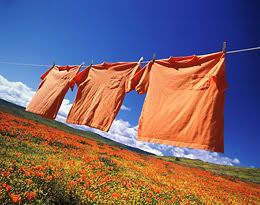
I can't remember how many times I had to go outside and pull down all the laundry from our clotheslines after my mother hung it out to dry in the morning.  It was one of those chores I hated doing when I was growing up, but I did it. Well, I had to. LOL.  Ironically enough people still do it, and it's a sure-fire way to save on electricity and the environment.  So yes, how we dry our clothes is one of the "Things We Can Do To Save The Environment". 

Giving credit to TIME,  I'd like to thank them for showing us the many ways we can meet these goals.  And yes, even one person can make a difference, and it starts with YOU! - Peter aka Blade7184

7. Hang Up a Clothes Line

You could make your own clothes with needle and thread using 100% organic cotton sheared from sheep you raised on a Whole Foods diet, but the environmental quality of your wardrobe is ultimately determined by the way you wash it. A recent study by Cambridge University's Institute of Manufacturing found that 60% of the energy associated with a piece of clothing is spent in washing and drying it. Over its lifetime, a T shirt can send up to 9 lbs. of carbon dioxide into the air. 

The solution is not to avoid doing laundry, tempting as that may be. Rather, wash your clothes in warm water instead of hot, and save up to launder a few big loads instead of many smaller ones. Use the most efficient machine you can find—newer ones can use as little as one-fourth the energy of older machines. When they're clean, dry your clothes the natural way, by hanging them on a line rather than loading them in a dryer. Altogether you can reduce the CO2 created by your laundry up to 90%. Plus, no more magically disappearing socks.
Make sure to follow Blade 7184 every Tuesday for a new issue of Things We Can Do To Save The Environment.  Each issue is thought-provoking, informative and may hold the key to saving your children and grandchildren's future.
 
Feel free to click on my logo above to read the back-issues.

Tuesday, February 28, 2012

Things We Can Do To Save The Environment - Issue No. 06 - Ditch The Mansion

The Global Warming Survival Guide

Purchasing a smaller home is one of the many ways to help save the environment, and at the moment, Ryan and I are living in it.  But our future goals have us buying a much larger one.  In this day and age there are many energy saving products we can buy, so hopefully by the time we build or buy our larger home we will still be doing our part.  

Giving credit to TIME,  I'd like to thank them for showing us the many ways we can meet these goals of saving our environment.  And yes, even one person can make a difference, and it starts with YOU! - Peter aka Blade7184

6. Ditch the Mansion

Oversize houses aren't just architecturally offensive; they also generally require more energy to heat and cool than smaller ones, even with efficient appliances. And in the U.S., big houses are becoming the norm, even though a relatively inefficient small house consumes less energy than a greener large house and uses fewer building materials, which expand the carbon footprint. A typical new single-family home in the U.S. is nearly 2,500 square feet today, up from about 1,000 square feet in 1950, even as the average household has shrunk from 3.4 to 2.6 people. 

If you really want to live small, visit Jay Shafer. The former art professor dwells alone in a home fit for a hobbit, 100 sq. ft. in northern California that he designed and built himself in 1999. Shafer now runs Tumbleweed Tiny House and sells custom designs for miniature dwellings that range from 70 sq. ft. to 350 sq. ft. He made his move because he felt guilty about the size of his residential carbon footprint, and now prefers life tiny and tidy. "If I throw my jeans down on the floor, I can't get across the room." 

Make sure to follow Blade 7184 every Tuesday for a new issue of Things We Can Do To Save The Environment.  Each issue is thought-provoking, informative and may hold the key to saving your children and grandchildren's future

Tuesday, February 21, 2012

Things We Can Do To Save The Environment - Issue No. 05: Pay the Carbon Tax


The Global Warming Survival Guide

Reducing carbon emissions around the world is one of the many "Things We Can Do To Save The Environment".  Giving credit to TIME,  I'd like to thank them for showing us the many ways we can meet these goals of saving our environment.  And yes, even one person can make a difference, and it starts with YOU! - Peter aka Blade7184
 

5. Pay the Carbon Tax

Everyone agrees that it's necessary to reduce carbon emissions around the world. There is less agreement over exactly how nations should go about achieving a more carbon-free planet. Hence, the environmental equivalent of Elvis vs. the Beatles: cap-and-trade carbon emissions, or impose a carbon tax on all users? With cap-and-trade programs, governments limit the level of carbon that can be emitted by an industry. Companies that hold their emissions below the cap can sell their remaining allowance on a carbon market, while companies that exceed their limit must purchase credits on that market. Carbon taxes are more straightforward: a set tax rate is placed on the consumption of carbon in any form—fossil-fuel electricity, gasoline—with the idea that raising the price will encourage industries and individuals to consume less. 

At the moment, cap-and-trade has the upper hand, since it serves as the backbone of the current Kyoto Protocol, and helped the U.S. reduce acid rain in the 1990s—but don't write off the tax just yet.  Supporters of the tax argue that a cap-and-trade system, especially one that would be global enough to mitigate the 8 billion tons of carbon the world now emits, would be too difficult to administer—and too easily gamed by industries looking to sidestep emissions caps. Cap-and-trade advocates counter that like all other flat taxes, a carbon levy would disproportionately burden lower-income families, who spend a greater percentage of their income on energy than rich households.

So which system will have the largest impact on carbon consumption? A 10% flat carbon tax might reduce the demand for carbon about 5% or less, according to an analysis by the Carbon Tax Center, an environmental advocacy group. That may not be enough. Businesses and governments haven't figured out how the two competing regimes can work together, but in the end, the world may need both.

Make sure to follow Blade 7184 every Tuesday for a new issue of Things We Can Do To Save The Environment.  Each issue is thought-provoking, informative and may hold the key to saving your children and grandchildren's future

Tuesday, February 14, 2012

Things We Can Do To Save The Environment - Issue No. 04: Light Up Your City

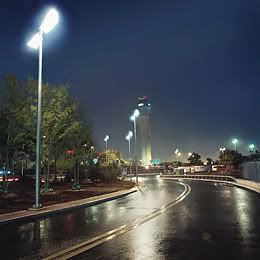
If it's one thing I really appreciate, it's the lighting around our neighborhood.  I guess now would be as good as time as any to ask our Homeowner's Association if they're burning our tax money by using old lights, instead of LEDs.   
 
Giving credit to TIME,  I'd like to thank them for showing us the many ways we can meet these goals of saving our environment.  And yes, even one person can make a difference, and it starts with YOU!

The Global Warming Survival Guide


4. Light Up Your City

Cities can save energy—and money—by illuminating public spaces with LEDs, or light-emitting diodes. Last December Raleigh, N.C., turned one floor of a municipal parking garage into a testing ground for LEDs (see the before-and-after photos at cree.com/LEDcity). 

The new white, brighter fixtures use 40% less electricity than the high-pressure sodium bulbs they replaced. Although they cost two to three times as much, they can go five or more years without upkeep. Traditional bulbs must be replaced every 18 months. Other types of LEDs are already at work in traffic lights, outdoor displays (like those in New York City's Times Square) and stadiums; airports even use LEDs on their taxiways. If your city is still burning tax money on old lights, ask the mayor why.

Make sure to follow Blade 7184 every Tuesday for a new issue of Things We Can Do To Save The Environment.  Each issue is thought-provoking, informative and may hold the key to saving your children and grandchildren's future
I have organized my blogs with 3 days worth of postings, so if you wish to continue reading the days before that, and so forth and so forth, you can click the "Older Posts" button /\ /\ /\ right /\ up there.

There are 3 other ways you can find interesting topics to read as well.

*Clicking on any of the links under my "Favorite Categories" section on the left hand side of your screen

*Using the Google Search bar under the scrolling text.

*By choosing a date from the drop down list on the right hand side of your screen.


Hope you enjoy my daily posts, and hope to hear from you soon.

- Blade 7184 aka Peter